If you’ve typed “CBT therapist near me” into Google recently, you already know the problem. The results come back fast. Lots of names, lots of smiling headshots, lots of profiles that say “CBT” right there in the specialty list. And then you’re supposed to just… pick one?
Here’s what nobody tells you: not everyone who calls themselves a CBT therapist actually knows how to do CBT. I’ve spent my career doing this work, training other clinicians in it, and presenting on it at national conferences. I’ve also seen the aftermath when people get bad therapy. So let me be honest with you about how to find someone who is the real deal, whether you’re in New Jersey, New York, or searching for online therapy from anywhere across the country.
This isn’t a listicle with five feel-good tips. This is the real talk that most people wish someone had given them before they wasted months in the wrong office.
First, Let’s Talk About “Fake CBT”
It’s more common than you think, and it’s worth knowing what it looks like.
Fake CBT usually looks like this: a therapist hands you a breathing exercise worksheet in session two, assigns you a thought record for homework, and calls it a day. There’s no real strategy behind it. No clinical thinking. No individualization. Just a stack of handouts and a hope that something sticks.
A handout is not a treatment. Homework alone is not a treatment.
Real CBT means a skilled clinician is getting to know you, your history, your symptoms, your patterns, and then carefully building an approach that is tailored to your specific situation. That takes genuine training, serious clinical thinking, and the depth to actually figure out what is going on with you before deciding how to treat it.
That last part is critical, and it’s where a lot of therapists fall short. Many therapists miss things. They make assumptions. They go straight from “you seem anxious” to a generic anxiety protocol without doing the work of understanding what is actually driving the picture. Clinicians call this a differential diagnosis, and it is not a step you can skip. When you treat the wrong thing, you don’t get better. You just get frustrated.
Here’s a real example. I had a patient recently who was referred to me for one presenting issue. My case conceptualization as a board-certified psychologist told me the picture was more complex than the referral suggested. So I didn’t just go with my instincts. I administered a structured clinical interview called the SCID, which is a gold-standard diagnostic tool that most patients have never even heard of, let alone received. And I consulted with a fellow expert to make sure I was thinking about it correctly.
That is what a thorough assessment looks like. That is what people deserve. Because people are complicated, and their treatment should honor that complexity instead of rushing past it.
One more thing about fake CBT that’s worth naming: a good CBT therapist does not tell you what to do. Real CBT is collaborative. We work with you, not at you. Trust is foundational. Respect is non-negotiable. If you’ve ever left a session feeling lectured, managed, or like the therapist wasn’t really listening, that is not a small thing. That is a problem with the therapist.
What to Ask Before You Commit
Most people treat the consultation call like a formality. They ask about availability, about cost, maybe about what the therapist “specializes in.” And the therapist says something that sounds good and everyone moves forward.
Don’t do that.
You are interviewing this person. They are auditioning for a role that matters a lot. Here are the questions that will actually tell you what you need to know.
What is your training in CBT specifically?
Not just “where did you go to school.” Specifically: where did you learn CBT, who supervised you, and what have you done to stay current since then? A great answer involves graduate training with real supervision, post-graduate consultation, ongoing workshops, and continued education. A vague answer like “I use a CBT-informed approach” or “I incorporate CBT techniques” is a yellow flag. That language often means they know the vocabulary but not the model.
Do you have any certifications in CBT?
This is where credentials really matter. Board certification through the American Board of Professional Psychology (ABPP) and the diplomate credential through the Academy of Cognitive and Behavioral Therapies (A-CBT) are the ones that mean something. These are not easy to earn. They require supervised hours, peer review, and demonstrated competence. A therapist who has them will tell you. A therapist who hasn’t will pivot to talking about other things.
Do you currently receive consultation?
This one surprises people, but it’s one of my favorites. Good therapists, no matter how experienced, bring hard cases to colleagues. They stay humble. They know that no one person has every answer and that the best thinking happens in community with other smart clinicians. A therapist who says “yes, I have ongoing consultation” is telling you something important about who they are. A therapist who looks at you blankly or says they used to, years ago, is also telling you something.
How long have you been doing this, and where did you get your training?
Experience matters. Pedigree matters. You are allowed to ask, and you should. There is a difference between a therapist who has been doing CBT for fifteen years in a specialty setting and one who took a two-day workshop and added it to their profile.
What approach would you use for someone like me?
This is the most important question on the list. A qualified CBT therapist should be able to talk with you about why they might lean toward traditional CBT versus ACT versus another evidence-based approach, how they’d figure out what fits you best, and how they’d track whether it’s working. If the answer sounds the same regardless of what you share, that’s a flag. Real treatment is individualized. Always.
The Psychology Today Problem
Therapist directories like Psychology Today are a reasonable place to start your search. They’re easy to use, they let you filter by location and specialty, and they show you headshots so you can get a feel for who you might want to talk to.
But here is what you need to understand before you trust them: anyone can check “CBT” as a specialty when they create their profile. There is no verification process. No credential check. No one at Psychology Today is confirming that the therapist who listed CBT as a specialty has any meaningful training in it.
That means a therapist with a weekend workshop and a folder of photocopied worksheets looks exactly the same on paper as someone who is board-certified, has been doing this for twenty years, trains other clinicians, and presents at national conferences.
The directories are a starting point. They are not a quality filter.
So use them to find names. Then go to the therapist’s actual website. Read it carefully. Look at their credentials. Look at where they trained. Look at whether they talk about CBT in a way that sounds specific and informed or vague and generic. And when you get on the phone with them, ask the questions above.
Your instincts are also worth trusting. If a consultation call feels off, if the therapist seems dismissive or rushed or like they’re already certain they know what you need before you’ve finished a sentence, pay attention to that.
Ready to talk to someone who actually gets it?
Whether you’re in New Jersey, New York, or anywhere online through PsyPact, we’re here. Schedule a free consultation and find out if we’re the right fit.
👉 Work with us at The CBT Center
How We Match You at The CBT Center (Spoiler: There’s No “Right” Person)
People come to us all the time with very specific ideas about what they need in a therapist. They want a woman. They want someone their age. They want someone who has “been through it themselves.” These preferences are understandable, and we take them seriously.
But here’s something I’ve learned after years of doing this work: the things people think will make therapy work are often not the things that actually make therapy work.
When you reach out to The CBT Center, we start by having you fill out a form so we can learn about who you are and what’s bringing you in. Then we look at two things together: your preferences AND the clinical expertise you actually need for your specific situation.
Both matter. But the clinical fit is not negotiable.
Maybe you have a strong preference for a certain kind of therapist, and that’s great, we hear it. But if what you’re dealing with requires specialized expertise in OCD, or trauma, or CBT for insomnia, then the most important thing is making sure you’re with someone who is genuinely skilled in that area. We think about this carefully for every single person who contacts us. It is not a coin flip.
Here is the thing I really want you to hear, though: there is no perfect therapist waiting out there for you. The “right fit” is not something you find fully formed. It is something you build, in the room, over time. Every clinician at The CBT Center is highly trained, warm, and genuinely invested in your progress. You are in good hands with any of them.
And if we assess your needs and determine that we’re not the right fit? We will tell you that honestly and connect you with someone we trust. We would rather refer you to the right place than keep you somewhere that isn’t serving you well. That’s not something every practice will do. We think it’s just the right thing.
What Good Therapy Actually Feels Like
When you find the right CBT therapist, and you will, here is what it feels like.
You feel respected. Not managed. Not talked at. Not handed a worksheet and sent on your way. You feel like the person across from you is genuinely curious about you, specifically, and is building something that makes sense for your life and your goals.
You feel like the plan makes sense. CBT is structured and purposeful, and a good therapist will explain the “why” behind what you’re doing. You shouldn’t be doing homework you don’t understand or techniques that feel random. Everything should connect back to what you’re working toward.
You feel challenged in the right ways. Good therapy is not always comfortable. You’re going to be asked to look at things differently, try things that feel uncomfortable, and practice skills that don’t come naturally yet. That is supposed to happen. But the discomfort should feel purposeful, not arbitrary.
And over time, you start to see things shift. Your mood lifts. You feel more hopeful than when you walked in. You start catching your own patterns before they catch you. The anxiety, the depression, the OCD, whatever brought you in, starts to take up less space.
That is what you’re looking for. And that is what you should hold out for, whether you find it with us in central New Jersey, in New York, or through online therapy anywhere across the country.
Why This Matters So Much to Me Personally
I didn’t just build The CBT Center to have a practice. I built it because I believe deeply that there is a shortage of genuinely skilled CBT therapists and that people deserve better than what a lot of them are getting.
Our tagline is “evidence-based treatment in a warm, friendly environment,” and I mean both parts with equal conviction. The evidence-based part means we stay current, we track outcomes, we consult with colleagues, we keep learning, and we don’t cut corners on assessment or treatment planning. The warm, friendly part means we are real humans who care about the people we work with, who sometimes laugh in session, and who you can actually talk to like a person.
We are board-certified. We hold our diplomate credentials. We train other therapists across the country and internationally in CBT and Motivational Interviewing. We present at national conferences. We are affiliated with the University of Pennsylvania’s sleep program for our CBT-I work.
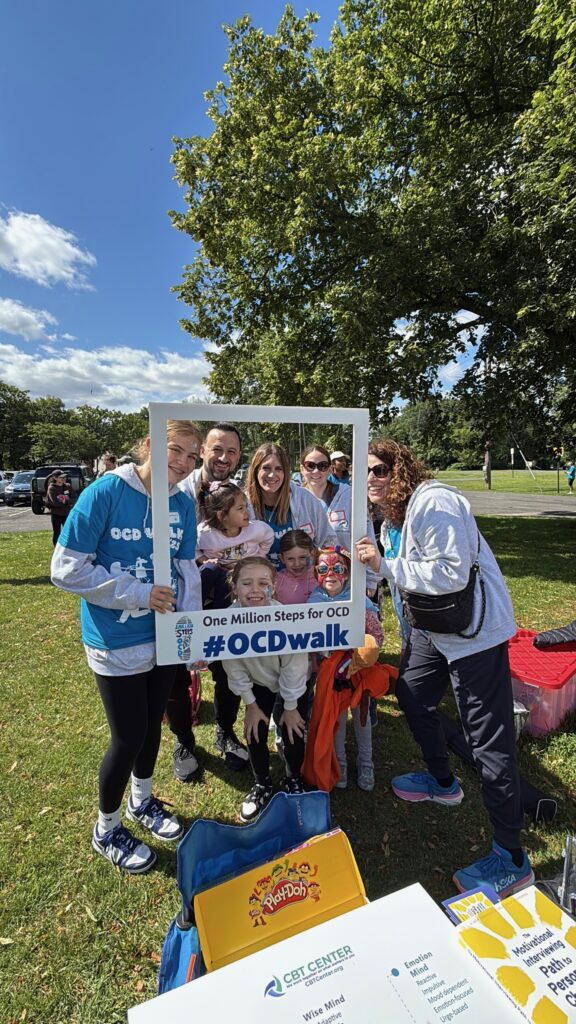
And we show up. Not just in the office. The CBT Center team walks in the OCD Walk every year, One Million Steps for OCD, because this work is not just what we do for a living. It is something we believe in. We give you a full session every time, we consult with colleagues on hard cases, and yes, we also show up on a Saturday morning in sneakers for the people we serve (Check out our pic)
If you’re searching for a CBT therapist in New Jersey, in New York, or through virtual therapy via PsyPact, I hope this gives you a real framework for what to look for. Ask the hard questions. Look at the credentials. Trust the consultation call.
You deserve real help from people who really know what they’re doing.
Reach out to The CBT Center today.
About Dr. Michelle Drapkin
Dr. Michelle Drapkin is a licensed psychologist, board-certified in cognitive behavioral therapy (ABPP, A-CBT), and the founder and director of The CBT Center in New Jersey. She earned her doctorate from Rutgers University and has been practicing for more than 20 years. She keynotes at national conferences and trains therapists in CBT and Motivational Interviewing at the state, national, and international level.
The CBT Center serves clients throughout New Jersey, New York, and 40+ states via PsyPact, offering individual therapy, couples therapy, family therapy, and specialized treatment for anxiety, depression, OCD, insomnia, and more. Their mission: Better Access to Better Care.
Ready to get started? Contact The CBT Center today.