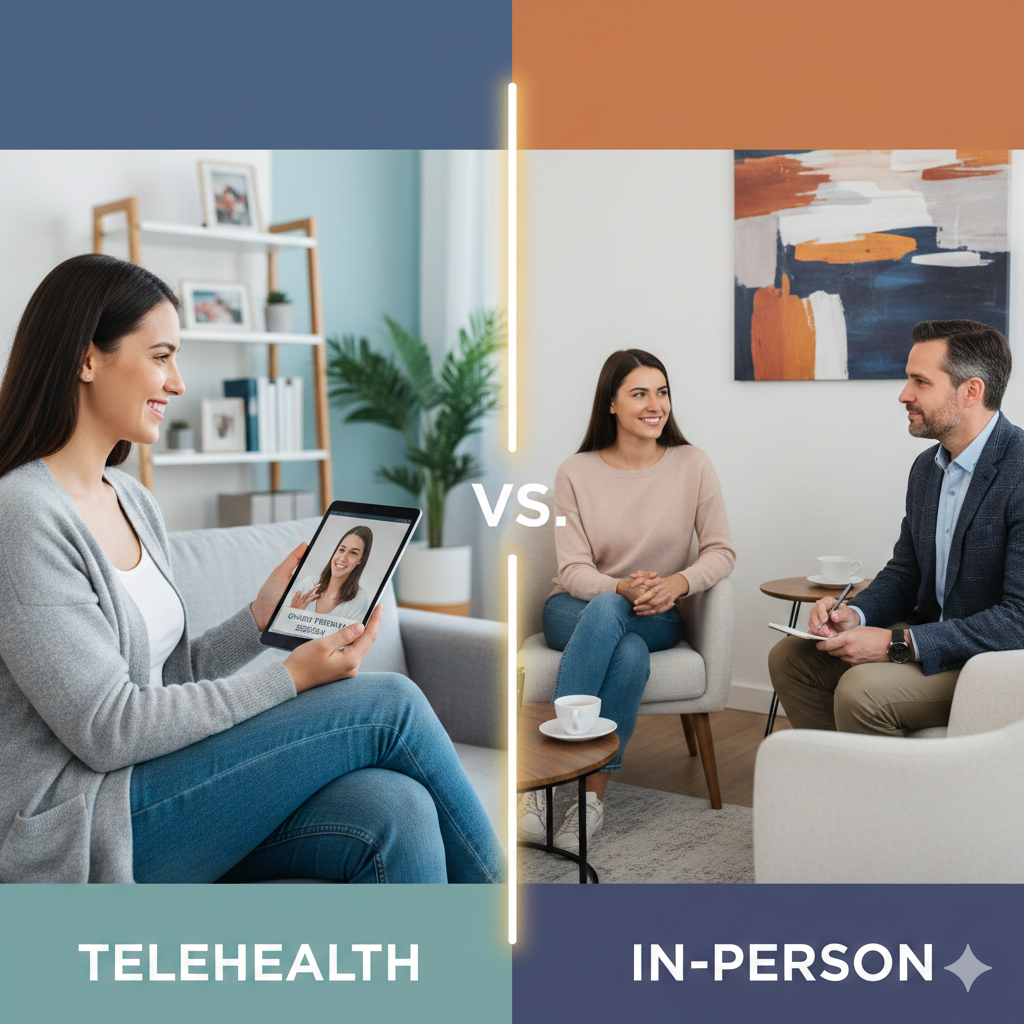
“Is virtual cognitive behavioural therapy as effective as meeting face‑to‑face?” If you’ve been wondering this, you’re not alone — we hear this question every week. After the pandemic pushed therapy online, clients have discovered that virtual CBT can be just as powerful as sessions conducted in an office. Recent research backs this up: systematic reviews comparing telemedicine with in‑person psychological interventions found that remote care is non‑inferior to traditional therapy, with multiple studies showing comparable reductions in anxiety and depression and high patient satisfaction. Another quasi‑experimental study in rural Texas reported that both telehealth and in‑person counselling groups showed similar improvements, with telehealth groups’ depression and anxiety scores falling below clinical levels during treatment. Meta‑analyses of randomized trials also confirm that telehealth CBT achieves equivalent outcomes for anxiety disorders and mood disorders while maintaining a strong therapeutic alliance.
Is Online CBT as Effective as In‑Person Therapy?
Virtual therapy offers many of the same benefits as traditional office visits. Studies consistently find that internet‑based CBT matches face‑to‑face outcomes for conditions like social anxiety, panic disorder and obsessive‑compulsive disorder. Clients also report high satisfaction and feel a strong bond with their therapist, even over video. These findings suggest that online CBT is a viable option for people who prefer to meet from home or need greater flexibility.
Why Teletherapy Works
CBT lends itself well to video sessions because it’s structured and skills‑based. Therapists can share worksheets on screen, review homework between sessions and guide you through cognitive restructuring or exposure exercises remotely. Telehealth eliminates many barriers to care — there’s no commute, no need to take extra time off work and no stigma of being seen entering a therapist’s office. Research shows that telemedicine is particularly valuable for people in rural or underserved areas, where there are shortages of mental‑health providers. Studies find that clients stick with telehealth longer and report high satisfaction. For social anxiety, panic disorder and OCD, internet‑based CBT is as effective as face‑to‑face CBT and retains its benefits at follow‑up.
If you’d like to learn more about what a cognitive‑behavioural session involves, visit our CBT therapy in Highland Park service page. If you’re specifically seeking telehealth CBT across New Jersey and PSYPACT states, our telehealth CBT page explains how remote care works and how to get started.
Curious if this is the right fit for you?
We offer a free consultation — no commitment, no jargon, just a real conversation about what you’re dealing with and whether CBT makes sense. Virtual or in-person, we’ll figure it out together.
👉 Schedule your free consultation
In‑Person Therapy Still Has Its Place
Face‑to‑face sessions offer benefits that can’t always be replicated over a screen. Being in the same room allows for richer nonverbal communication and immediate support during intense exposures. For individuals with severe symptoms, in‑person therapy may provide a sense of safety and accountability that’s harder to achieve remotely. Our Highland Park office is designed to be a calming, private space — and yes, we really do love seeing clients there! The good news is you don’t have to choose one format forever. Many clinicians use a hybrid model, alternating between virtual and in‑person sessions depending on your needs, schedule and treatment goals.
Advantages of Virtual CBT
- We meet you where you are. Teletherapy lets us work together from your home, office or even your car during a lunch break. That flexibility means you’re more likely to attend sessions consistently.
- Real‑world exposures. Exposure therapy is a cornerstone of CBT. With a phone or tablet, your therapist can accompany you (virtually) on a drive, a grocery trip or a social gathering to coach you through anxiety in the moment.
- Expanded reach. As a PSYPACT practice, we can legally provide therapy to clients across many U.S. states, which means you can continue sessions while travelling or after relocating.
- Reduced stigma. Meeting from home can feel less intimidating, and your therapist is just a click away. Telehealth helps overcome barriers such as transportation, childcare and physical disabilities.
Pro Tips for Successful Teletherapy
- Choose a private, comfortable space. Make sure you feel secure and won’t be interrupted. Noise‑cancelling headphones can help you focus.
- Use a reliable device. Sessions work well on phones, tablets or computers. Check your internet connection and camera before logging in.
- Leverage your lunch hour. Many clients schedule sessions during a work break; telehealth makes this possible without commuting.
- Walk‑and‑talk when appropriate. For behavioural activation or exposure tasks, grab your phone and move around while you talk — this can help integrate therapy into daily life.
- Have a plan for privacy. If you live with others, consider sitting in your car or using a white‑noise machine outside your door.
What About Insurance?
We operate out‑of‑network (OON), which means we don’t bill insurance directly, but we’re happy to provide detailed receipts (superbills) for you to submit for reimbursement. Many insurance plans reimburse a portion of out‑of‑network mental‑health services, especially now that telehealth parity laws require insurers to cover remote care. We’ll work with you to understand your benefits and make payment straightforward.
Final Thoughts
Virtual CBT isn’t a second‑best option — it’s an evidence‑based approach that can be as effective as traditional therapy for most anxiety and mood disorders. Whether you join us in our Highland Park office or from your living room, what matters most is the therapeutic relationship and your commitment to practicing new skills.
If you’re searching for a “CBT therapist near Highland Park, NJ” or want to begin online CBT for anxiety, OCD or depression, we invite you to contact us to schedule a consultation. We’ll help you decide whether in‑person, virtual or a hybrid approach makes sense for your needs. Reach out.